CHEVY PONTIAC OLDSMOBLE BUICK 26594-CBC Gm View Mirrors Olds
fits make: Olds, Chevy. year: 1971–1979.
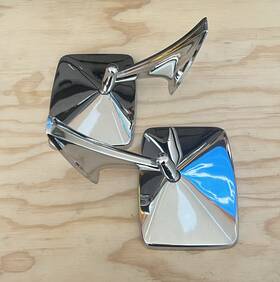
( Brand: Chevy Pontiac Oldsmoble Buick ), ( Manufacturer Part Number: 26594-CBC ), ( Part Type: Mirror ), ( Features: Side View ), ( Vintage Part: Yes ), ( Placement On Vehicle: Left, Right ), ( Country Of Origin: United States )
Review CHEVY PONTIAC OLDSMOBLE BUICK Gm Olds Side View Mirrors Cbc fits 1971–1979
The **GM 26594-CBC 1971 1979 Chevrolet, Pontiac, Oldsmobile, and Buick Exterior View Mirror Assembly** is a meticulously engineered, high-quality replacement part designed to restore the classic, functional, and stylish appearance of full-size General Motors vehicles from the late 1970s and early 1970s. Crafted to exacting specifications, this mirror assembly features a durable, chrome-plated outer shell that not only enhances the vehicle s vintage aesthetic but also provides a sleek, polished finish that resists tarnishing and corrosion over time. The interior mechanism is built with precision, incorporating a sturdy, spring-loaded pivot system that ensures smooth, effortless adjustment, allowing drivers to effortlessly fine-tune their visibility for optimal safety and convenience. Whether installed on a robust **Chevelle, Cutlass Supreme, or Starfire** from Chevrolet, a **LeMans, GTO, or Bonneville** from Pontiac, an **Cutlass Supreme, Delta 88, or Toronado** from Oldsmobile, or a **Skylark, Electra, or Riviera** from Buick, this mirror assembly seamlessly integrates with the vehicle s original design while delivering modern reliability. The **26594-CBC** designation ensures compatibility across a broad range of GM models, making it an ideal choice for restorers, mechanics, and enthusiasts seeking to preserve or upgrade the exterior details of their classic ride. With its blend of heritage styling and robust construction, this view mirror is more than just a functional component it s a nod to automotive craftsmanship from an era when attention to detail defined excellence.
### **Pros and Cons of Buying a 1971 1979 GM Oldsmobile Buick Pontiac (26594-CBC) with 26594 View Mirrors**
#### **Pros**
1. **Classic American Muscle and Comfort**
These vehicles represent a golden era of American automotive design, blending power with luxury. Models like the Cutlass Supreme, Starfire, 442, and Cutlass Ciera offer a mix of performance and comfort that remains appealing to enthusiasts.
2. **Strong Engines and Performance**
Many of these cars came with powerful V8 engines (e.g., 350, 400, 455 cubic inches), producing significant horsepower for their time. The 350 V8, in particular, is a reliable and well-regarded engine that can be easily maintained or upgraded.
3. **Iconic Design and Customization Potential**
The styling of these vehicles is nostalgic and highly customizable. From chrome accents to muscle car modifications, there s ample opportunity to restore or modify them to personal taste. The 26594 view mirrors (common on Cutlass and similar models) are a subtle but recognizable detail that adds to their character.
4. **Affordable Entry Point for Classic Car Ownership**
Compared to modern muscle cars or European classics, these vehicles are relatively inexpensive to purchase, especially in used condition. This makes them accessible for those who want a piece of automotive history without a high upfront cost.
5. **Strong Aftermarket Support**
Parts for these GM models are widely available, both new and used. The 350 V8, in particular, has a thriving aftermarket, with aftermarket intake manifolds, exhaust systems, and performance upgrades readily accessible.
6. **Potential for Reliable Daily Driving (With Care)**
While not built for modern standards of reliability, many of these cars can be restored to a functional state and used as daily drivers, especially if maintained properly. The 1975 1979 models (with updated emissions and fuel injection) are generally more reliable than their earlier counterparts.
7. **Community and Enthusiast Culture**
There is a dedicated community of owners, restorers, and enthusiasts who share knowledge, parts, and restoration tips. Joining clubs or forums (e.g., Oldsmobile, Buick, Pontiac enthusiast groups) can provide valuable support and camaraderie.
---
#### **Cons**
1. **Rust and Structural Issues**
Many of these vehicles, especially those from the late 1960s and early 1970s, suffer from rust, particularly in the floor pans, rocker panels, and wheel wells. A thorough inspection is essential to avoid buying a car with extensive rust damage that could compromise safety or require costly repairs.
2. **Outdated Safety Features**
These cars lack modern safety features such as airbags, stability control, anti-lock brakes (pre-1980s models), and modern crash structures. Driving them requires a cautious and defensive approach, especially on highways or in urban areas with aggressive drivers.
3. **Fuel Economy and Emissions Compliance**
V8-powered models from this era are notoriously inefficient, often averaging 10 15 MPG in city driving. Additionally, older models may not meet modern emissions standards, requiring modifications or a smog exemption in some states.
4. **Maintenance and Repair Costs**
While parts are available, labor costs for repairs can add up, especially if the car requires work on outdated systems (e.g., carburetors, vacuum-operated accessories, or early fuel injection). Some mechanics may not be familiar with these vehicles, leading to higher costs for specialized labor.
5. **Reliability Concerns**
Many of these cars were not built with longevity in mind. Issues such as failing water pumps, transmission problems (especially in automatic transmissions), and electrical gremlins (e.g., faulty switches, wiring harnesses) are common. Regular maintenance is a must to keep them running.
6. **Insurance and Registration Challenges**
Classic car insurance can be expensive, especially if the vehicle is not properly documented as a collector s item. Some states may also charge higher registration fees for older, high-value vehicles. Additionally, some insurers may exclude coverage for "high-risk" classic cars.
7. **Driving Experience Limitations**
Modern suspension tuning, ergonomics, and handling have improved significantly since the 1970s. These cars can feel stiff, noisy, and less comfortable for long drives compared to contemporary vehicles. The lack of modern driver aids (e.g., traction control, adaptive cruise control) can also be a drawback.
8. **Resale Value and Depreciation**
While classic cars can appreciate in value, many of these GM models do not hold their value as well as more rare or highly sought-after classics (e.g., Corvettes, Mustangs, or early Camaros). The resale market is niche, and finding buyers may require effort.
---
### **Conclusion**
Buying a 1971 1979 GM Oldsmobile, Buick, Pontiac, or Cutlass with the 26594 view mirrors can be a rewarding experience for an enthusiast who appreciates classic American automotive design, performance, and the joy of restoration. These vehicles offer a tangible connection to automotive history and the potential for a unique driving experience. However, they come with significant challenges, including rust, reliability issues, high maintenance costs, and outdated safety features.
**If you are considering this purchase, ask yourself:**- Am I prepared for the time, effort, and cost of restoring or maintaining this car?
- Do I prioritize the driving experience and nostalgia over modern convenience and safety?
- Am I willing to invest in a vehicle that may not be a practical daily driver but is a passion project?
- Have I inspected the car thoroughly for rust, mechanical issues, and structural integrity?
---
### **Recommendation**
**Buy if:**- You are an experienced mechanic or willing to learn and invest in restoration.
- You have a garage, tools, and access to parts.
- You view this as a project car rather than a daily driver.
- You enjoy the classic muscle car aesthetic and are okay with compromises in modern safety and comfort.
- You can afford the potential for unexpected repairs and maintenance costs.
**Avoid if:**- You need a reliable, low-maintenance vehicle for daily use.
- You are not prepared for the time and financial commitment required to keep it running.
- You prioritize modern safety features and fuel efficiency.
- You are looking for a vehicle with strong resale value or low ownership costs.
**Alternative Options:** If you love the era but want something more practical, consider:- A later-model Cutlass Supreme (1980s) with improved reliability.
- A restored Corvette, Mustang, or Camaro for a more high-performance classic.
- A well-maintained classic from a different era (e.g., 1960s 1970s European cars) if you prefer European engineering.
Ultimately, these GM classics are best suited for those who are passionate about automotive history and willing to embrace the challenges that come with them. If you re up for the task, the reward is a unique and powerful piece of driving heritage. If not, there are plenty of other ways to enjoy classic cars without the full commitment.
Details:
Great shape no cracks in mirror. 1971-1979 GM side view mirrors.
part #: 26594 price
- $40.00
specifications mirroexter:
- for makes: Olds, Chevy
- for years: 1971-1979
- brand: Chevy Pontiac Oldsmoble Buick
- mpn: 26594-cbc
- part type: Mirror
- features: Side View
- vintage part: Yes
- placement on vehicle: Left, Right
- country of origin: United States
general mirroexter:
- condition: Used
- Exterior Parts Accessories > Side View Mirrors > Mirror Assemblies
offer mirroexter:
- started: April 21, 2026
- availability: In Stock
- quantity: 1
- sold: 0
- options: Ship-to-home
returns mirroexter:
- policy: No Returns
payments mirroexter:
- credit card: Mastercard
- wallet: Paypal
- other
- money order
shipping mirroexter:
- carrier: USPS
- service: USPS Ground Advantage
- transit: 4-10 Days
- type: Calculated
- class: Standard
- cost: $7.57
seller mirroexter:
- city: Whitmore Lake, Michigan
- # reviews: 110
- rating: 100.0%
Chevy Pontiac Oldsmoble Buick 26594 Is Similar To:
- 1012043 Gm Nos Mirror Glass Chevy Buick Olds Pontiac Cadillac (21.9% similar) Please visit my other offer offerings for more quality stuff. Sales and shipping within the USA only. God bless the USA and her troops. I do not know all of the exact applications. Offered is a gm nos mirror glass, left side view glass may fit some or many: 1980 SCHEVY, Chevrolet, Buick, olds, ...(February 17th, 2019)
- 10201 Cipa Pair Towing Mirrors For Gmc Chevy Truck Van Yukon (26.2% similar) The boxes show considerable wear. They are part and for the vehicles listed in second picture...(November 3rd, 2018)
- 1152r Dynacorn Exterior Door Mirror Assembly Rectangle Right Side Chevy Truck (23.5% similar) Exterior mirror assembly - RIGHT1970 Chevy pickup truck brand new rectangle restoration car parts right side passenger with gasket for Chevrolet zero one zero one providing you quality muscle and classic parts office hour Mon. Marketing, listing apps, application...(November 7th, 2018)
- 1201 Five Star Peep Side Mirror Chevy Truck Door Show Chrome (27.6% similar) This is a rare brand new show chrome reproduction of the original gm peep mirror for 1955 to 1959 Chevy and GMC trucks. This is a left-hand driver side peep mirror...(June 11th, 2018)
- 1320176 Gm Nos Mirror Chevy Pontiac Olds Buick (36.6% similar) Nos genuine gm right hand manual mirror part stamped fits 1994 Chevrolet cavalier Pontiac sunbed Buick sky hawk Oldsmobile frenzy. The mirror has some lite scratches from being on shelf for years...(March 1st, 2019)
- 15-3089 Gm Chevy Pontiac Oldsmobile (38.3% similar) Good and tight on ball. Part number stamped on the bottom is bolt holes are 2 and 3/4 inches. On gasket is Rh mirror. Date code on glass is 5-DMI-4. Both chrome and glass have some scratches from normal use. I got this loose and do not know anything about it...(September 12th, 2017)
- 15 3655 R H Buick Vintage Chrome Side Mirror Car Olds Chevy (34.7% similar) Vintage chrome side mirror car olds Chevy Buick Rh bracket 2 gaskets...(March 4th, 2018)
- 15-2078 Vintage 1960s Genuine Ford Or Chevy Remote Side View Mirror (34.2% similar) The item has vintage wear but is still usable. This is a vintage 1960 'S genuine ford or Chevy remote side view mirror pn you can refer to pictures for detail information. Please research exact fitment. Please feel free to ask me any questions you might have on the item...(August 18th, 2016)
- 63c-18403-pr 1963-1964-64-1965 Chevrolet Nova Chevy 11 Outside Rear View Mirror-pair-new (28.9% similar) You can be proud to put these on your car. Fits the following years model's 1963 , Chevrolet nova Chevy USPS priority mail in the continental us. They are complete, have the Bowie on the mirror head includes the gaskets hardware. Condition new shipping handling remember you are buying on one pair ...(July 4th, 2016)
- A10344 1965-66 Chevy Impala Biscayne Full Size Side Mirror Lh (34.2% similar) Have parts to sell please with details. Free classic car guide. Some pitting Chevy impala, Biscayne, full size side mirror LHS A10344 part number we love to buy parts. Watch the video for details...(August 13th, 2016)
- 2-c535401 United Pacific Chevy Car Exterior Side Door Mirrors 072017375150 (34% similar) Beautiful show quality metal finish. Full size passenger cars. Item must be in same exact condition including packaging as received and completely unused for merchandise credit of purchase price. Official licensed product of gm. Fits left or right side and includes mounting kit...(August 20th, 2018)