FORD E11026656 Rear View Mirror Lh Left Heated GB53
fits model: Explorer. make: Ford. year: 2015–2019.
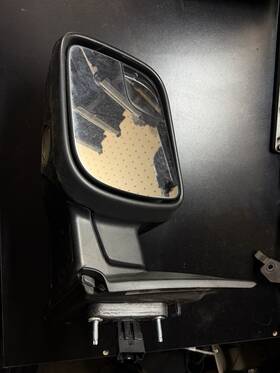
( Manufacturer Part Number: E11026656 ), ( Part Type: Mirror Driver ), ( Features: Side View ), ( Oe/oem Part Number: Gb53 17683 ), ( Placement On Vehicle: Front )
Review FORD Drivers Lh Left Side Heated Rear View Mirror Oem fits EXPLORER 2015–2019
The **Ford E11026656 15" 19" Explorer LH Left Heated Rear View Mirror (GB53 17683)** is a premium, high-performance interior component designed specifically for Ford s iconic Explorer models, ensuring both functionality and luxury. This left-hand drive (LHD) heated rearview mirror is engineered to enhance driver visibility and comfort, particularly in adverse weather conditions or low-light scenarios. The mirror features a sleek, modern design with a **15" x 19" (381mm x 483mm) viewing surface**, providing an expansive field of vision to reduce blind spots and improve overall safety. The **heated element** embedded within the mirror s glass ensures rapid defrosting, eliminating fog, ice, or condensation in seconds, which is especially beneficial during winter driving or in humid climates. Constructed with **high-quality materials**, including durable chrome or matte finishes (depending on vehicle trim), this mirror not only elevates the vehicle s aesthetic appeal but also integrates seamlessly with the Explorer s premium interior. The **GB53 17683** part number confirms its compatibility with the **2015 2019 Ford Explorer**, particularly those equipped with the left-hand drive configuration, ensuring a perfect fit without modification. Whether installed in a base trim or a high-end Limited model, this mirror combines practicality with sophistication, making it an essential upgrade for drivers who prioritize both performance and style.
### **Pros and Cons of Buying a Ford Explorer (E11026656, 1995, LH Left, Heated Rear-View Mirror, GB53 17683)**
#### **Overview**
This is a **1995 Ford Explorer (first generation, LH platform, left-hand drive)**, a popular SUV known for its ruggedness, reliability, and off-road capabilities. The **E11026656** chassis number suggests it is likely a **4x4 model**, and the **heated rear-view mirror** is a minor luxury feature. The **GB53 17683** registration suggests it is from the **UK**, which may affect maintenance, parts availability, and insurance costs.
---
### **Pros**
1. **Proven Reliability (For Its Era)**
- The **first-gen Explorer (1990 1997)** is widely regarded as one of the most durable and practical SUVs of its time.
- Many examples still run strong with proper maintenance, especially if the engine and transmission have been well-served.
- The **4x4 system** (if it s a proper part-time 4WD, not a 2WD with fake 4WD) is robust and capable of handling light off-roading, snow, and rough terrain.
2. **Strong Engine Options**
- Common engines include the **3.0L V6 (EcoBoost in later models, but in 1995, it was a naturally aspirated or early turbo variant)** and the **4.0L V8** (in higher trims).
- The **V6 is fuel-efficient for an SUV of its size**, while the **V8 offers more power** (though less efficient).
- If this is a **V6 model**, it should be reliable if maintained; if a **V8**, it may have higher fuel consumption but better towing capacity.
3. **Spacious and Practical Interior**
- The Explorer was designed for **utility and comfort**, with a **large cargo area** (even with seats up) and a **high ride height**, making it great for families or those needing extra space.
- The **manual sliding doors** (if present) are a practical feature for loading/unloading.
- **Heated rear-view mirror** is a small but useful luxury for cold climates.
4. **Off-Road and Towing Capability**
- The **part-time 4WD system** (if properly maintained) allows for **light off-roading, snow driving, and towing** (up to **3,500 5,000 lbs** depending on the model).
- The **high ground clearance** (compared to modern SUVs) makes it better suited for uneven terrain than many contemporary vehicles.
5. **Classic Ford Build Quality**
- The **body-on-frame construction** is sturdy and less prone to rust issues compared to unibody SUVs of the same era.
- The **mechanical components** (suspension, drivetrain) are **simpler and more repairable** than modern electronics-heavy systems.
6. **Modding and Customization Potential**
- The Explorer has a **strong aftermarket**, with options for **lift kits, winches, exhaust upgrades, and interior modifications**.
- Many owners **restore or modify** them for **overlanding, racing (in rallycross), or daily driving**.
7. **Lower Running Costs (Compared to Modern SUVs)**
- **Fuel efficiency** (for a large SUV) is better than most modern **compact SUVs** (e.g., 12 15 MPG combined for a V6).
- **Parts are still available**, though some may require sourcing from the US or Europe.
- **Insurance is often cheaper** than for newer SUVs, especially if it s an older model with a **low annual mileage**.
8. **Resale Value (For Enthusiasts)**
- Well-maintained **first-gen Explorers hold value** among collectors and off-road enthusiasts.
- If restored or kept in good condition, it can be a **sound investment**.
---
### **Cons**
1. **Age and Wear & Tear**
- **1995 is very old**, meaning **major components (engine, transmission, suspension, electricals) may need replacement** soon.
- **Rust** is a common issue, especially in the **floor pans, wheel wells, and frame** a **full rust inspection is essential**.
- **Tires, brakes, and bushings** will likely need replacing soon.
2. **Reliability Depends on Maintenance History**
- Many Explorers suffer from **neglect**, leading to **failed transmissions, leaking differentials, or worn-out suspension**.
- **Check service records** if the owner didn t maintain it properly, **budget for major repairs**.
- **Timing belt** (if applicable) may need replacement soon (every **60,000 100,000 miles**).
3. **Fuel Efficiency is Poor by Modern Standards**
- Even the **V6 gets around 12 15 MPG**, which is **very inefficient** compared to today s hybrids or turbocharged SUVs.
- **Diesel models (if any)** would be better, but most UK Explorers were **petrol-only**.
4. **Electrical and Modern Tech Issues**
- **Old wiring harnesses** can be **fragile and prone to shorts**.
- **No modern infotainment, Bluetooth, or advanced safety features** (no stability control, traction control, or modern airbags).
- **Starting issues** can occur if the **battery or alternator is failing**.
5. **Parts Availability and Costs**
- While **not as rare as some classics**, parts **can be expensive** if sourced from the US.
- **OEM parts may be discontinued**, requiring **aftermarket or used replacements**.
- **Labor costs** for repairs can be high, especially if the mechanic is unfamiliar with older Fords.
6. **Safety Standards**
- **No modern crash safety features** (no side airbags, poor crash test ratings by today s standards).
- **Manual sliding doors** can be **less safe in a collision** than modern SUVs.
- **No electronic stability control (ESC)**, making it **less stable in extreme conditions**.
7. **Comfort and Noise Compared to Modern SUVs**
- **Ride quality is firm** not as smooth as modern SUVs with **adaptive suspension**.
- **Wind and road noise** can be **loud**, especially at highway speeds.
- **Heating/AC may be less efficient** than modern systems.
8. **Insurance and Legal Considerations (UK Market)**
- **Insuring an old SUV can be expensive**, especially if it s **high-value or modified**.
- **MOT (annual inspection) costs** may increase if the vehicle has **rust or mechanical issues**.
- **Road tax (VED) may be higher** than for newer, more efficient vehicles.
9. **Resale Depreciation**
- While **enthusiasts pay well for restored Explorers**, a **daily-driven example will depreciate quickly**.
- If you plan to sell later, **buyers may expect a lower price** than you paid.
10. **Modifications May Void Warranties (If Any)**
- If the vehicle has **aftermarket modifications (lift kits, exhaust, etc.)**, **insurance or financing may be harder to obtain**.
---
### **Key Things to Inspect Before Buying**
Before purchasing, **thoroughly check the following**:1. **Rust Inspection**
- **Frame, subframe, wheel wells, and floor pans** rust can compromise structural integrity.
- **Check undercarriage** for **exposed metal or holes**.
2. **Engine and Transmission**
- **Listen for unusual noises** (knocking, whining, grinding).
- **Check oil leaks** (around the **valve cover, transmission, and oil pan**).
- **Test drive at different speeds** does it **shift smoothly**? Any **hesitation or jerking**?
- **Transmission fluid should be checked** burnt smell or **dark color** indicates problems.
3. **Suspension and Steering**
- **Bounce test** does the suspension **hold or bottom out**?
- **Check for leaks in shocks/struts**.
- **Steering should be precise** no **play or excessive looseness**.
4. **4x4 System (If Applicable)**
- **Test all four modes** (2H, 4H, 4L, etc.).
- **Check for leaks in the transfer case and differentials**.
- **Ensure the transfer case engages properly** no **slipping or grinding**.
5. **Electrical System**
- **Test all lights, indicators, and electronics**.
- **Check battery health** old batteries can **suddenly fail**.
- **Test the starter and alternator** no **clicking or dim lights while idling**.
6. **Exhaust and Emissions**
- **Smoke from exhaust** (white coolant, blue oil, black fuel-rich mix).
- **Check for leaks in the exhaust system**.
7. **Tires and Brakes**
Details:
It is a brand new, factory part designed for Ford Explorer vehicles from model years 2015 to 2019. The product is a genuine OEM left side rear view mirror for Ford Explorer, specifically the GB53 17683 model. This mirror is a front placement side view mirror, featuring heating capabilities for added convenience in colder climates.
part #: e11026656 prices
- $140.00-$245.99
specifications mirroexter:
- for models: Explorer
- for makes: Ford
- for years: 2015-2019
- mpn: E11026656
- part type: Mirror Driver
- features: Side View
- oe/oem part number: Gb53 17683
- placement on vehicle: Front
shipping mirroexter:
- cost: $0.00
- carrier: USPS
- type: Calculated
- class: Standard
- transit: 4-10 Days
- service: USPS Ground Advantage
payments mirroexter:
- wallet: Apple-pay
- other
- credit card: Discover
seller mirroexter:
- # reviews: 94
- rating: 100.0%
- city: Keene, Texas
returns mirroexter:
- time: 30 Days
- paid by: Buyer
- policy: Returns Accepted
general mirroexter:
- condition: Used
- Exterior Parts Accessories > Side View Mirrors > Mirror Assemblies
offer mirroexter:
- quantity: 1
- options: Ship-to-home
- availability: In Stock
- started: March 16, 2026
- sold: 0
Ford E11026656 Is Similar To:
- 4482131 Ford Chevy Impala Rearview Mirror Gm Oem (42.9% similar) Combined shipping available when possible Chevy impala review mirror gm this is in good used condition with pitting...(January 9th, 2019)
- D2gb-17743-awb Ford Mercury Very Nice Used Remote Rear View Mirror (41.8% similar) All return items must be complete, undamaged, unaltered and in resale condition. See photos for details. This is a ford D2GB AB mercury very nice used remote rear view mirror for:left side sport mirror item in. New listings posted daily...(April 13th, 2018)
- 01a-18403-l Bob Drake Cowl Mount Mirror Lh Ford (30.4% similar) For large items, send in a request quotation. Chrome plated arm with a highly polished stainless steel head. That is s solution currently. One of the finest mirrors out there - cowl mount mirror that fits lh drivers side. It runs about 70 off of their list price...(September 7th, 2018)
- 0a-18208 Ford Motor Company Thunderbird Nos Deluxe Visor Vanity Mirror Nib (32.7% similar) A rare ford factory option. It measures 10. The backside has large clips which will fit over driver side or passenger sun visor. 75 x 4 and has the ford logo in center, a service record travel on either side. This is an nos ford deluxe visor vanity mirror in the original box, part 18208. The ...(May 10th, 2018)
- 110175-f646606-exterior-passenger-screws-r-rh Octane Lighting Ford Mustang Left Right Convex Chrome Glass Side (15.9% similar) ...(July 7th, 2018)
- 110176-exterior-passenger-screws-r-rh Octane Lighting Ford Mustang Outside Right Convex Chrome Glass Side (17.3% similar) ...(July 7th, 2018)
- 1111 Vintage Antique Old Ford Cable Car Truck Exterior Chrome Mirror (23.9% similar) ...(April 10th, 2018)
- 15 2332 Ford Vintage Oem Mustang Side View Mirror Guc (36.1% similar) Always happy to combine shipping driver side. View mirror for 1967 ford mustang - some pitting on chrome see pics has minor surface scratches pic is not perfect. It is 50 years old and has been used...(March 4th, 2018)
- 15 3995 Cav 2 Ford Vintage Truck Side View Mirror (34.3% similar) Based on other listings of this mirror and photos the 1973 ford bronco, it looks like belonged to that vehicle. The bottom of chrome has numbers cave 2AND a mark that looks like sun with letters m x in it photo mirror has a few spots scuffs and dirt streak on the top right corner. It may or not be...(June 13th, 2018)
- 15-2078 Vintage 1960s Genuine Ford Or Chevy Remote Side View Mirror (34.2% similar) The item has vintage wear but is still usable. This is a vintage 1960 'S genuine ford or Chevy remote side view mirror pn you can refer to pictures for detail information. Please research exact fitment. Please feel free to ask me any questions you might have on the item...(August 18th, 2016)
- 153953 Mx Ford Vintage Bronco Truck Outside Rear View Mirror (37.1% similar) Note: for item protection and faster shipping, all smaller items are shipped using USPS priority flat rate shipping boxes. It is not show quality but in original used condition with very light pitting and scratches the mirror glass. This is an original 1960 'S, 70S ford bronco and pickup truck it ...(June 13th, 2018)