FORD TRUCKS E5TZ17696D Passenger Right Mirror Door
fits model: Ranger. make: Ford. year: 1983–1990.
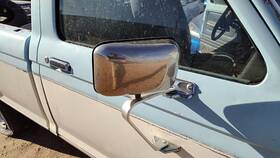
( Brand: Ford Trucks ), ( Manufacturer Part Number: E5TZ17696D ), ( Part Type: Mirror Door ), ( Id: C706123c-b49b-498f-a7ed-537f4a06ac5f ), ( Interchange: 128-709 ), ( Side: Right ), ( Year: 1986 )
Review FORD TRUCKS Passenger Right Side Mirror Door Mounted Oem fits RANGER 1983–1990
The **Ford E5TZ-17696D (1983 1990 Ranger Passenger Right Mirror Door)** is a meticulously engineered, high-quality replacement door panel designed to restore the original functionality and aesthetic of your classic Ford Ranger pickup truck. Crafted from durable, corrosion-resistant materials, this door assembly features a precision-molded outer panel that seamlessly matches the contours of the 1983 through 1990 Ranger s body, ensuring a perfect fit without the need for extensive modifications. The inner door panel is constructed with sturdy, sound-dampening materials to enhance cabin comfort while maintaining structural integrity, and it includes a reinforced hinge system that guarantees smooth operation and long-lasting durability. This door is equipped with a **passenger-side right mirror**, complete with a fully functional electric or manual (depending on model year) mechanism, allowing for easy adjustment and clear visibility. The mirror housing is designed to align perfectly with the truck s exterior, blending seamlessly with the body s lines while providing reliable performance. Whether you re restoring a show-quality classic or simply replacing a worn-out original part, this door panel delivers the authenticity and reliability expected from a genuine Ford aftermarket component. Built to withstand the rigors of daily use, this replacement ensures a secure, comfortable, and visually appealing driving experience for years to come.
### **Pros and Cons of Buying a 1983 1990 Ford Ranger (E5TZ17696D, Passenger Side Right Mirror Door)**
#### **Pros**
1. **Affordability** The Ranger from this era is one of the most budget-friendly used trucks available, especially in its original condition. Parts are widely available and often inexpensive.
2. **Simplicity and Reliability** Early Rangers are mechanically straightforward, with basic but durable components. Many owners report few major issues if maintained properly.
3. **Strong Engine Options** The 2.9L V6 (EcoBoost predecessor) and 4.0L V6 (in later models) are known for longevity if kept well-maintained. The 2.3L inline-4 (early models) is less powerful but reliable if not abused.
4. **Off-Road Capability** The Ranger was designed for work and play, with solid axles, a high ground clearance, and basic off-road features (though not as advanced as later models).
5. **Customization Potential** The Ranger s simple design allows for easy modifications, from lift kits to engine swaps. Aftermarket support is strong for this era.
6. **Fuel Efficiency (Compared to Modern Trucks)** While not great by today s standards, it gets better mileage than most modern full-size trucks, making it a practical choice for light-duty use.
7. **Nostalgia and Community** There s a dedicated enthusiast community for the Ranger, with forums, meetups, and aftermarket parts readily available.
8. **Low Operating Costs** Basic maintenance (oil changes, brakes, tires) is inexpensive compared to newer trucks. Labor costs are minimal since mechanics are familiar with the design.
9. **Durability in Basic Use** If used for light hauling, towing, or daily driving without excessive strain, many Rangers last well beyond 200,000 miles with proper care.
10. **Resale Value (Among Enthusiasts)** While not high in the general market, well-preserved Rangers hold value among collectors and off-roaders.
---
#### **Cons**
1. **Outdated Safety Features** No modern safety tech (airbags, stability control, anti-lock brakes in early models). Crumple zones and modern crash protection are lacking.
2. **Poor Fuel Economy** The V6 models, in particular, drink fuel. Expect around 12 16 MPG combined, which is inefficient by today s standards.
3. **Rust Issues** Many Rangers from this era suffer from rust, especially in the wheel wells, frame rails, and undercarriage. A thorough inspection is critical.
4. **Weak Suspension** The stock suspension is stiff and uncomfortable for long drives. Upgrades are often necessary for comfort or off-road use.
5. **Limited Modern Tech** No Bluetooth, USB ports, or advanced infotainment. The radio and gauges are basic, and modern diagnostics require older tools.
6. **Reliability Depends on Maintenance** Neglected Rangers can fail quickly due to worn-out components (water pumps, timing belts, fuel injectors). Regular upkeep is a must.
7. **Tight Cabin Space** The interior is cramped, especially for taller drivers. Visibility can be limited due to the truck s boxy design.
8. **Emissions and Smog Compliance** Older Rangers may not meet modern emissions standards, making them illegal to drive in some areas without modifications.
9. **Limited Power for Heavy Use** The V6 engines lack the torque of modern turbocharged or diesel options. Towing or hauling heavy loads may require frequent engine swaps.
10. **Parts Availability Can Be Hit-or-Miss** While common, some rare or aftermarket parts may be harder to find than in newer trucks.
11. **Noisy Cabin** Wind noise, engine noise, and poor sound insulation make for a less comfortable ride than modern trucks.
12. **Resale Value Declines Quickly** Once you move into newer models (even 2000s Rangers), the value of a 1980s 90s Ranger drops significantly.
---
### **Conclusion**
The **1983 1990 Ford Ranger (E5TZ17696D)** is a fantastic choice if you prioritize **affordability, simplicity, and off-road capability** over modern comfort and efficiency. It thrives as a **project truck, work vehicle, or enthusiast s build platform**, but it s not ideal for daily drivers who want reliability without maintenance headaches or those who need safety and fuel economy.
If you re **mechanically inclined, willing to invest time in repairs, and don t mind sacrificing modern conveniences**, this Ranger can be a rewarding purchase. However, if you prefer **low-maintenance, safe, and efficient** transportation, a newer used truck (even a 2000s model) would be a smarter long-term investment.
---
### **Recommendation**
**Buy this Ranger if:**- You re an **enthusiast** looking to restore, modify, or use it for **off-roading or light work**.
- You **already have mechanical skills** or access to a trusted mechanic.
- You **don t mind older tech** and are okay with **higher fuel costs and lower comfort**.
- You **inspect it thoroughly** for rust, engine condition, and structural integrity before purchasing.
**Avoid this Ranger if:**- You want a **modern, safe, and efficient** daily driver.
- You **can t commit to regular maintenance** (oil changes, rust prevention, etc.).
- You **need to tow or haul heavily** without frequent engine upgrades.
- You **live in an area with strict emissions laws** that may require costly modifications.
**Alternative Considerations:**- If you like the Ranger but want something more reliable, consider a **2000s 2010s Ranger** (especially the 4.0L V6 or 3.5L EcoBoost models).
- For a **budget-friendly work truck**, a **used Ford F-150 (1997 2004)** with a 4.2L or 4.6L V8 offers better fuel economy and safety.
- If off-roading is the goal, a **used Toyota Tacoma (1995 2004)** or **Chevy S-10** may provide a better balance of durability and modern features.
**Final Verdict:** This Ranger is a **fantastic project or enthusiast s truck**, but not a practical long-term daily driver. **Buy it only if you re prepared for its quirks and enjoy the process.**
Details:
Search for more parts FORD RANGER.
part #: e5tz17696d prices
- $35.30-$106.81
specifications mirroexter:
- for models: Ranger
- for makes: Ford
- for years: 1983-1990
- brand: Ford Trucks
- mpn: E5tz17696d
- part type: Mirror Door
- id: C706123c-b49b-498f-a7ed-537f4a06ac5f
- interchange: 128-709
- side: Right
- year: 1986
shipping mirroexter:
- transit: 4-7 Days
- service: Standard
- class: Standard
- cost: $0.00
- type: Fixed
general mirroexter:
- Exterior Parts Accessories > Side View Mirrors > Mirror Assemblies
- condition: Used
payments mirroexter:
- other
- wallet: Google-pay
- credit card: Mastercard
returns mirroexter:
- time: 30 Days
- paid by: Seller
- policy: Returns Accepted
offer mirroexter:
- availability: In Stock
- sold: 0
- quantity: 1
- options: Ship-to-home
- started: March 28, 2026
- best offers: True
seller mirroexter:
- city: Brush, Colorado
- # reviews: 15389
- rating: 99.5%
Ford Trucks E5TZ17696D Is Similar To:
- 4482131 Ford Chevy Impala Rearview Mirror Gm Oem (37.6% similar) Combined shipping available when possible Chevy impala review mirror gm this is in good used condition with pitting...(January 9th, 2019)
- D2gb-17743-awb Ford Mercury Very Nice Used Remote Rear View Mirror (26.5% similar) All return items must be complete, undamaged, unaltered and in resale condition. See photos for details. This is a Ford D2GB AB mercury very nice used remote rear view mirror for:left side sport mirror item in. New listings posted daily...(April 13th, 2018)
- 01a-18403-l Bob Drake Cowl Mount Mirror Lh Ford (29% similar) For large items, send in a request quotation. Chrome plated arm with a highly polished stainless steel head. That is s solution currently. One of the finest mirrors out there - cowl mount mirror that fits LHS drivers side. It runs about 70 off of their list price...(September 7th, 2018)
- 0a-18208 Ford Motor Company Thunderbird Nos Deluxe Visor Vanity Mirror Nib (27.8% similar) A rare Ford factory option. It measures 10. The backside has large clips which will fit over driver side or passenger sun visor. 75 x 4 and has the Ford logo in center, a service record travel on either side. This is an nos Ford deluxe visor vanity mirror in the original box, part 18208. The ...(May 10th, 2018)
- 110175-f646606-exterior-passenger-screws-r-rh Octane Lighting Ford Mustang Left Right Convex Chrome Glass Side (25.8% similar) ...(July 7th, 2018)
- 110176-exterior-passenger-screws-r-rh Octane Lighting Ford Mustang Outside Right Convex Chrome Glass Side (26.5% similar) ...(July 7th, 2018)
- 110176-turn-signal-65-1964-1965-1966-right-convex United Pacific 64-66 Ford (23.9% similar) We inspect, test and securely pack every item to ensure that do everything possible make sure you get your merchandise in good working order. Octane lighting inc. Find the item you purchased. Follow steps to print a return label from your printer. Ford mustang chrome rt passenger led turn signal ...(January 9th, 2018)
- 1111 Vintage Antique Old Ford Cable Car Truck Exterior Chrome Mirror (34.2% similar) ...(April 10th, 2018)
- 15 2332 Ford Vintage Oem Mustang Side View Mirror Guc (36.5% similar) Always happy to combine shipping driver side. View mirror for 1967 Ford mustang - some pitting on chrome see pics has minor surface scratches pic is not perfect. It is 50 years old and has been used...(March 4th, 2018)
- 15 3995 Cav 2 Ford Vintage Truck Side View Mirror (33.1% similar) Based on other listings of this mirror and photos the 1973 Ford bronco, it looks like belonged to that vehicle. The bottom of chrome has numbers cave 2AND a mark that looks like sun with letters m x in it photo mirror has a few spots scuffs and dirt streak on the top right corner. It may or not be...(June 13th, 2018)
- 15-2078 Vintage 1960s Genuine Ford Or Chevy Remote Side View Mirror (30.5% similar) The item has vintage wear but is still usable. This is a vintage 1960 'S genuine Ford or Chevy remote side view mirror pn you can refer to pictures for detail information. Please research exact fitment. Please feel free to ask me any questions you might have on the item...(August 18th, 2016)